
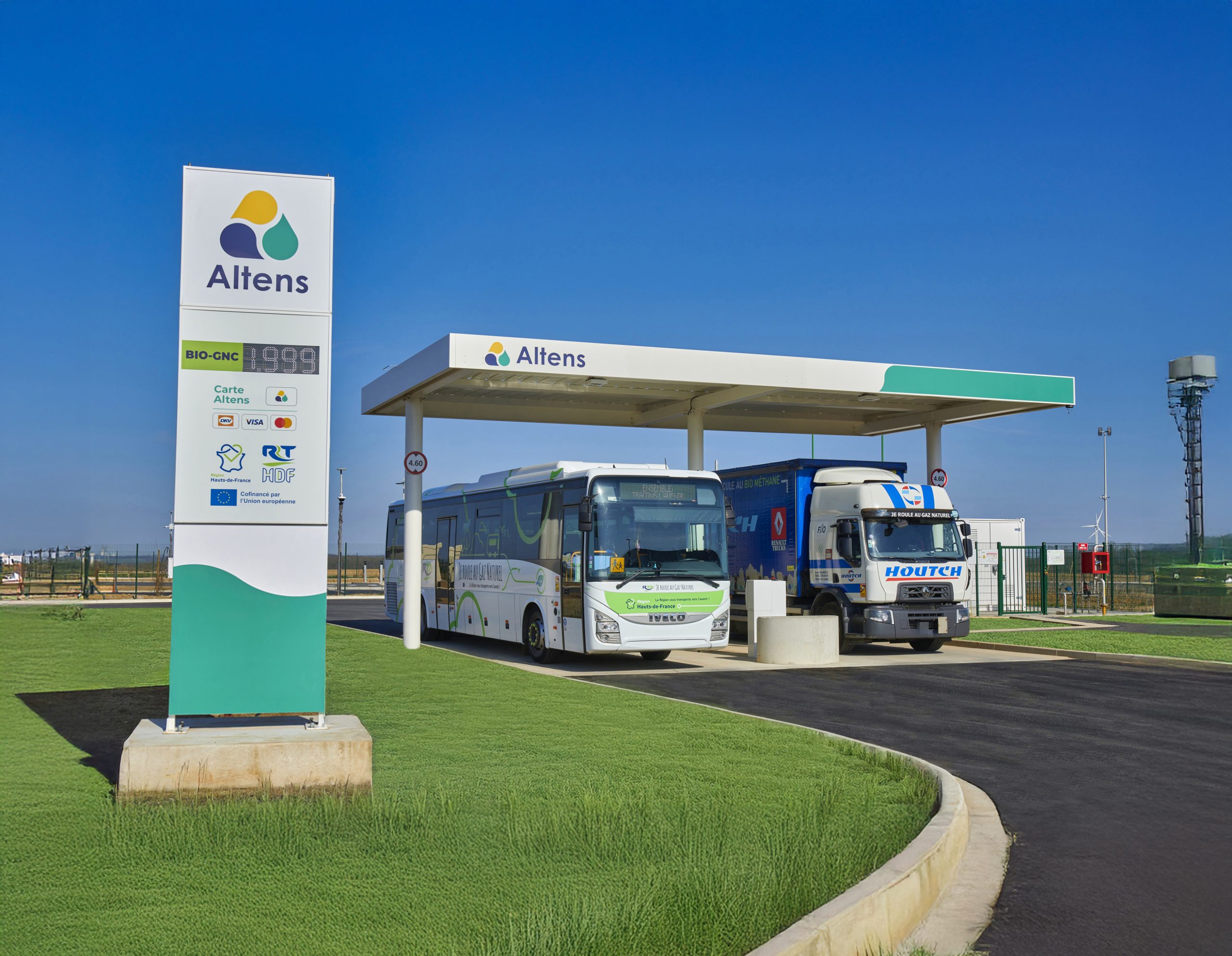
Altens takes a new step in its low-carbon mobility development with the opening of a new BioGNC station in Guise, in the Aisne region.
Located in the heart of the Briqueterie Industrial Zone in Guise (02), this facility is now operational and offers 24/7 fueling for all types of vehicles.
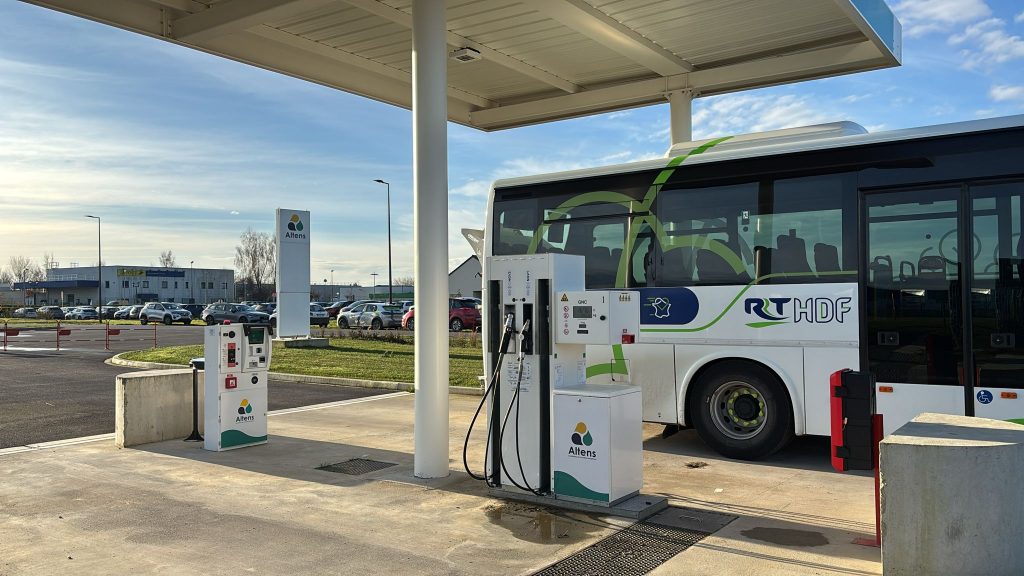
According to Altens, a 120 kg biomethane fill-up can be completed in 10 to 15 minutes, a performance level that places this station among the most efficient in the current network. Two dispensing lanes allow multiple vehicles to be fueled simultaneously: up to six heavy goods vehicles per hour, ensuring a flow rate adapted to the needs of local transport or urban collection fleets.
“We don’t just provide high-performance low-carbon energy: we are building a reliable and sustainable network, designed for the operational requirements of transporters,” declares Étienne Valtel, General Manager of Altens. “The opening of BioGNC stations, and soon multi-energy stations, embodies our commitment to offering sustainable solutions to drastically reduce the carbon footprint of transport, starting today.”
Locally Produced Energy Serving Regions and France
In a European energy context still marked by gas price volatility, the emergence of such infrastructures represents a real turning point. Locally produced biomethane not only helps to secure supply, thanks to methanizers located in the region, but also to reduce dependence on fossil fuel imports. This relocation of energy production thus contributes to greater strategic autonomy, while creating value in regional agricultural and industrial sectors. BioGNC thus becomes a concrete lever for regions, and more broadly for France, in terms of economic and energy sovereignty.
The gas market is now showing more favorable signals after several years of turbulence. Before the energy crisis, the Gas Exchange Point (PEG) was around €18/MWh. Prospects for 2025 indicate an expected average price close to €36/MWh, marking the end of the critical phase experienced between 2021 and 2024. For 2026-2027, the trend is towards a moderate correction or sustained stabilization: no return to historically low levels, but a now reduced gap compared to the peaks of recent years. The rise in LNG imports, increased diversification of supply sources, better secured stocks, and the first signs of geopolitical appeasement, particularly with regard to Russia, contribute to this gradual stabilization.
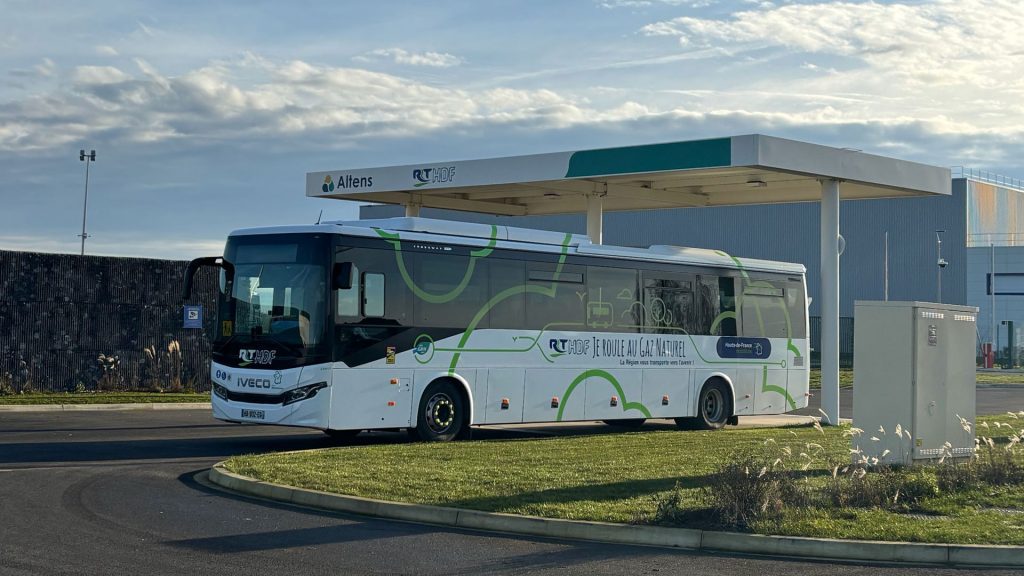
These prospects improve BioGNC’s attractiveness in terms of TCO. This energy is becoming increasingly competitive compared to diesel. The additional cost remains limited and competitive compared to other renewable alternatives, which is perfectly reasonable given the massive reductions in CO₂ emissions and the contribution to transport decarbonization. BioGNC thus confirms its place in the energy transition of professional fleets.
With this station in Guise, and the simultaneous opening of a BioGNC facility in Moret-Loing-et-Orvanne (77) and the start of work on a multi-energy station in Gondreville (54), Altens continues to deploy a network of infrastructures dedicated to low-carbon mobility in France.