
at a glance
Plastigarbi is a cross-border European project for the collection, treatment
and recovery of marine and river plastic waste.




Partners
Udalbiltza, IFHVP, UPPA, Estia, Altens, Leartiker, Plentzia Marine Station (EHU)
A European project led by seven cross-border partners
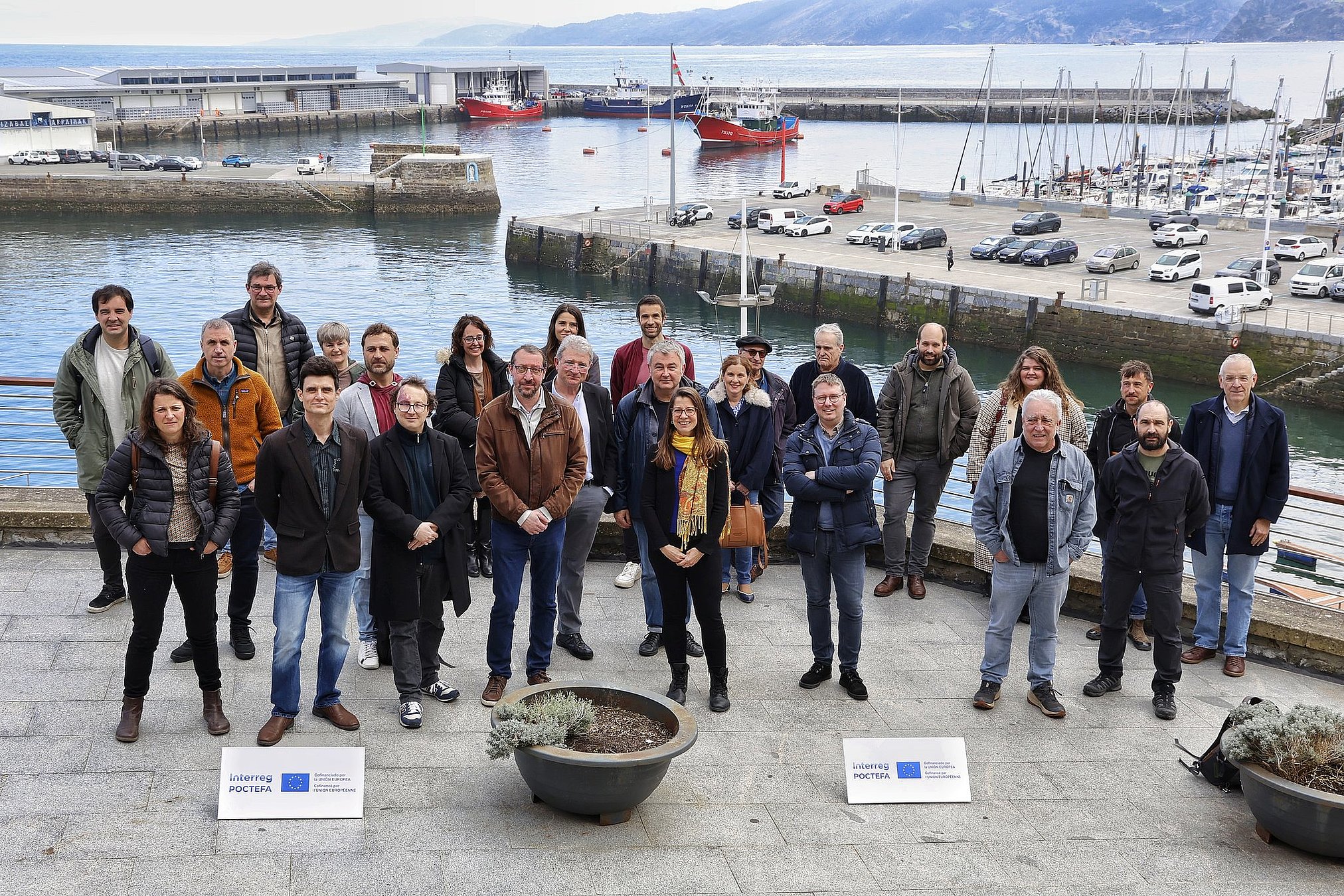
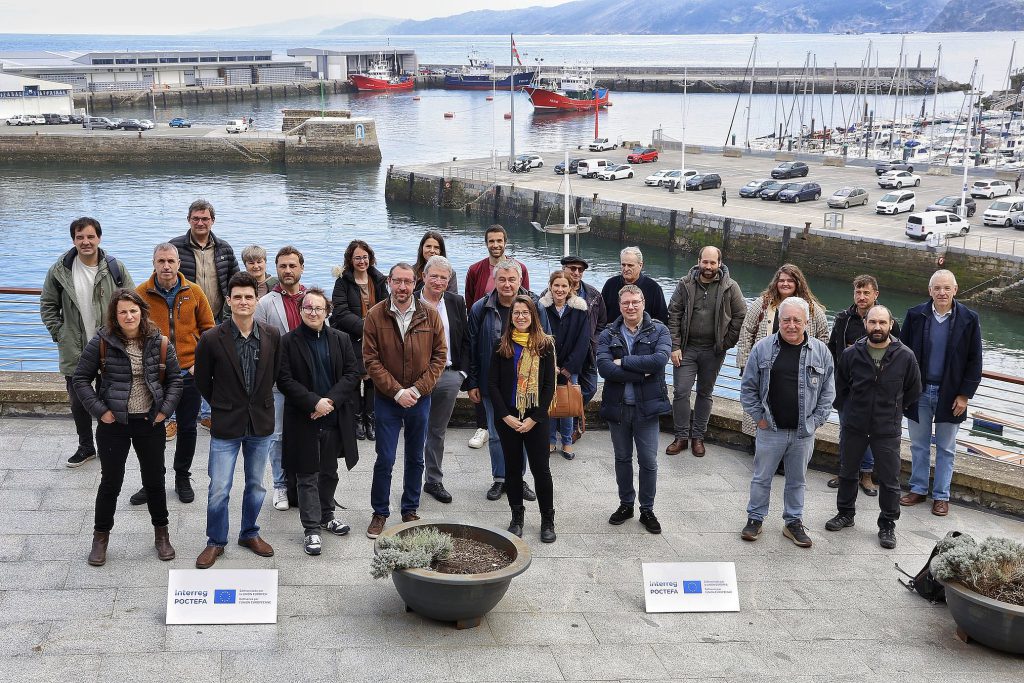
PLASTIGARBI was officially presented on March 10, 2026, in Getaria, in the Spanish Basque Country, during a launch event organized at Zarautz Jauregia. The project was selected as part of the second call for projects of the European POCTEFA 2021-2027 program, which supports cross-border cooperation between France, Spain, and Andorra.
Coordinated by the Udalbiltza consortium, the project brings together seven partners with complementary expertise:
- Udalbiltza, the coordinator, federates more than 80 Basque municipalities on both sides of the border.
- The French Institute of Pure Vegetable Oils (IFHVP) provides its expertise in thermochemical processes and energy recovery.
- The University of Pau and the Pays de l’Adour (UPPA) works on the scientific characterization of the collected plastics.
- Estia, an engineering school located in Bidart, contributes to industrial process engineering.
- Altens leads the material and energy recovery efforts, including the production of synthetic fuels.
- Leartiker, a technology center in the Spanish Basque Country, works on material transformation.
- The Plentzia Marine Station (University of the Basque Country, EHU) manages the scientific component in the marine environment.
Summary of partners:
Partner | Role in PLASTIGARBI |
|---|---|
|
Udalbiltza (Basque Country) |
Project coordinator |
|
IFHVP (France) |
Expertise in pure vegetable oils and thermochemical processes |
|
UPPA – University of Pau and the Pays de l’Adour |
Research and characterization of plastics |
|
Estia (Bidart) |
Engineering and industrial processes |
|
Altens (La Rochelle) |
Material and energy recovery, synthetic fuels |
|
Leartiker (Spanish Basque Country) |
Technology center, material transformation |
|
Plentzia Marine Station (EHU) |
Scientific study of waste in the marine environment |
Why Altens is committed to marine plastic recovery
For Altens, an independent distributor of alternative fuels and a decarbonization facilitator, PLASTIGARBI is a natural extension of an innovation strategy at the intersection of the circular economy and the energy transition. Plastic pollution in marine and river environments is both a major environmental challenge and an industrial opportunity: that of restoring value to materials currently considered waste.
A cascading approach: material recovery first
The project systematically prioritizes the most virtuous solution. Whenever possible, collected plastics are directed toward material recovery: mechanical recycling, upcycling, and reintegration into industrial chains. This is the lowest carbon footprint option and the most aligned with European waste management priorities.
A pragmatic response for complex streams: energy recovery
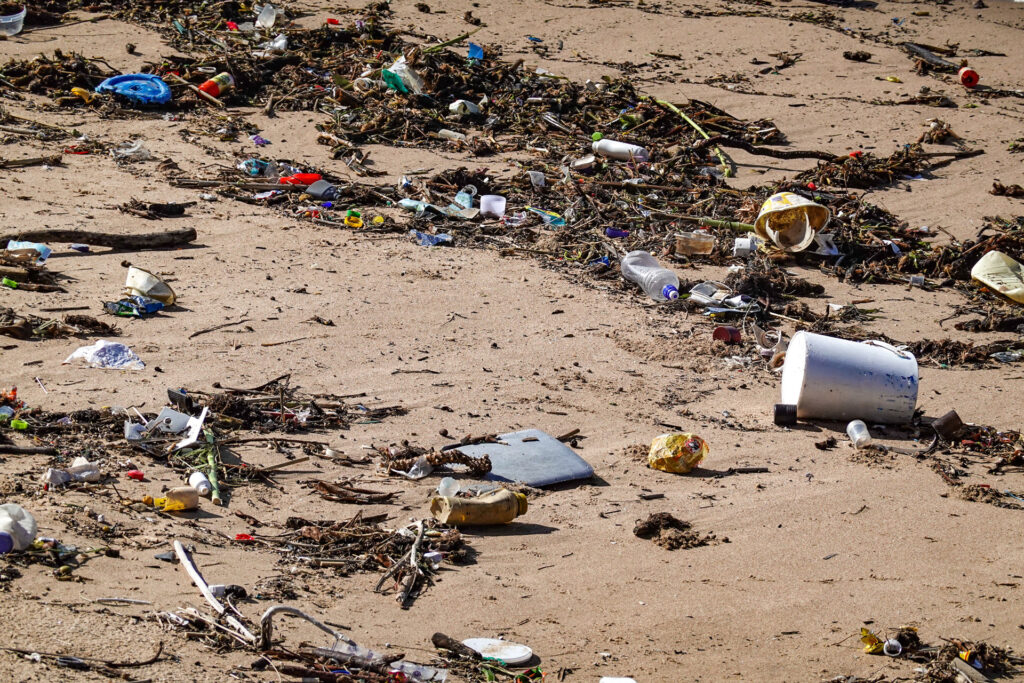
Not all marine plastics are suitable for recycling. Degradation by UV and salt, multi-material mixtures, and biological contamination mean that some streams are currently difficult to recover as materials. For these fractions, PLASTIGARBI is studying energy recovery pathways, notably the production of synthetic fuels through thermochemical processes. This approach allows for the capture of residual value where landfilling or incineration without recovery would be the only alternatives.
This link between priority material recovery and complementary energy recovery corresponds to the European waste treatment hierarchy and the vision held by Altens: an energy transition based on immediate, technically realistic solutions adapted to each stream.
Three lines of action over 3 years
The PLASTIGARBI work program is structured around three operational lines, designed to cover the entire value chain.
1. Mapping coastal stakeholders and waste
The first line consists of creating a complete techno-economic map of the collection and recycling stakeholders for marine and river waste in the POCTEFA zone. This mapping is supplemented by identifying the types of waste accumulated on the coast and an analysis of the legislation in force on each side of the border.
2. Treatment through cross-border technological cooperation
The second line is dedicated to the treatment of collected plastics. It combines several complementary techniques developed by French and Spanish partners. A specific component is dedicated to the deconstruction of end-of-life boats, identified by local stakeholders as a major source of composite plastics.
3. Consolidating a local recovery sector
The third line aims to provide a sustainable structure for the cross-border network established during the project. The goal is to create a lasting local sector around the characterization, collection, and recovery of marine plastics, by encouraging cooperation between economic, scientific, and institutional stakeholders from both countries.
1.58 million euros co-funded by the ERDF
PLASTIGARBI has an overall budget of €1,587,545.04 over 3 years. The POCTEFA 2021-2027 program, supported by the European Regional Development Fund (ERDF), co-funds 65% of this amount. The remaining 35% is provided by the consortium partners.
The POCTEFA program is a European territorial cooperation program dedicated to the France-Spain-Andorra cross-border area. It funds projects addressing common challenges in the territories on both sides of the Pyrenees and the Basque Atlantic.
A word from Étienne Valtel, Managing Director of Altens
“
With PLASTIGARBI, we want to apply an approach that is both ambitious and pragmatic: first, whenever possible, seek the most virtuous upcycling and material recovery solutions for marine plastic waste. But we also know that some of these streams, which are more complex or more degraded, will require complementary energy recovery pathways. Altens’ commitment is rooted in this balance between environmental standards, innovation, and industrial realism.
An approach consistent with Altens’ decarbonization strategy
Since its creation in 2020, Altens has been supporting transport and industry stakeholders in their decarbonization. The PUR range covers B100 (PUR100, up to -60% CO2 compared to diesel), HVO100 (PUR-XTL, up to -90% CO2), BioCNG (PUR-BioGNV), biomass (PUR-BioM), electric (PUR-ELEC, PUR-WATT), and photovoltaics (PUR-SUN). The MyAltens tool ensures carbon traceability for customer consumption.
Altens’ involvement in PLASTIGARBI is part of this multi-energy logic: exploring all pathways, from alternative fuels to synthetic fuels derived from waste recovery, to offer immediate decarbonization solutions adapted to every use.
Altens is ISCC, ISO 9001, and EcoVadis Silver certified, and a member of the Smart Freight Centre.
Frequently asked questions
What is the PLASTIGARBI project?
PLASTIGARBI is a cross-border European project dedicated to the collection, treatment, and recovery of marine and river plastic waste on the Basque coast. Launched in March 2026 for 3 years, it is funded by the POCTEFA 2021-2027 program (ERDF).
Who funds PLASTIGARBI?
The project has an overall budget of €1,587,545.04. The European POCTEFA 2021-2027 program, powered by the European Regional Development Fund (ERDF), co-funds 65% of this amount. The remaining 35% is provided by the seven consortium partners.
What is Altens’ role in PLASTIGARBI?
Altens primarily contributes to the marine plastic recovery efforts. The company provides its expertise in material recovery and, for streams that cannot be recycled, in energy recovery through the production of synthetic fuels.
Why talk about synthetic fuels for plastic waste?
Some marine plastics are too degraded or too heterogeneous for material recycling. Thermochemical processes allow these streams to be transformed into low-carbon synthetic fuels, capturing energy value that would otherwise be lost. This pathway remains secondary to material recycling, in accordance with the European waste treatment hierarchy.
Where does the project take place?
PLASTIGARBI covers the cross-border Basque coast, on both sides of the French-Spanish border. The launch event was held in Getaria (Spanish Basque Country) on March 10, 2026.
When will the project be completed?
PLASTIGARBI is being deployed over 3 years starting from early 2026, with a scheduled closure in 2029.
About Altens
Altens is an independent distributor of alternative fuels and a decarbonization facilitator for transport and industry stakeholders in France. Founded in 2020 and based in La Rochelle (with an office in Lieusaint in Île-de-France), the company offers a complete multi-energy range under the PUR brand: B100, HVO100, BioCNG, biomass, electric, and photovoltaics. Altens supports its customers from fuel supply to carbon traceability via the MyAltens platform, including the preparation of Energy Savings Certificate (CEE) grant applications (up to €100,000 per vehicle).